Views: 0 Author: Site Editor Publish Time: 2026-08-25 Origin: Site
Data center uptime is non-negotiable. Facility power densities continue to increase rapidly. Micro data centers proliferate across diverse environments. Stringent environmental mandates take effect globally. Facility engineers face a complex mechanical challenge. You must balance the proven transient response and high energy density of diesel against emerging alternatives. Natural gas offers continuous supply, lower fuel logistics overhead, and significant low-emission benefits. You must also account for site-specific environmental stressors like salt air or extreme humidity.
This guide provides a technical evaluation framework for comparing gas and diesel power generation. We analyze performance metrics, physical footprint constraints, and regulatory compliance. We examine when heavy-duty marine architectures are adapted for mission-critical stationary data center applications. You will learn how to align your backup power infrastructure with both uptime requirements and long-term sustainability goals.
Diesel engines offer superior energy density by volume, higher operating efficiency, and faster step-load acceptance, making them the historical standard for Tier III and Tier IV data centers, though they require complex on-site fuel management.
Natural gas generators eliminate on-site fuel degradation risks, significantly reduce NOx and CO2 emissions, and lower ongoing fuel costs, but rely on vulnerable external pipeline infrastructure.
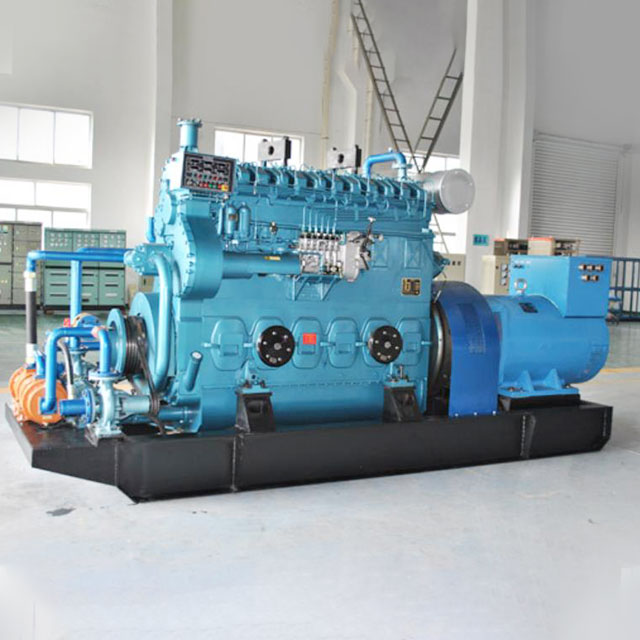
Coastal, modular, and edge data centers increasingly evaluate a marine generator for its continuous-duty rating, corrosion resistance, and extreme-environment reliability.
Lifecycle models must factor in local emissions compliance, fuel storage footprint (and the real estate savings of eliminating it), and lifecycle maintenance rather than just upfront capital expenditure.
Selecting the right backup power architecture requires strict alignment with facility uptime goals. You evaluate generators against rigorous international standards. The primary objective remains seamless transition and absolute fault tolerance during grid instability. Engineers do not simply buy an engine; they integrate a complex mechanical system into a highly sensitive electrical topology.
The Uptime Institute defines strict criteria for data center reliability. Tier III facilities require concurrently maintainable infrastructure. You must be able to shut down any single power component for maintenance without impacting the IT load. This typically dictates an N+1 generator configuration. Tier IV facilities demand complete fault tolerance. A single failure anywhere in the power chain must not cause downtime, requiring a 2N architecture. Backup generators serve as the ultimate safety net for both classifications. They must provide continuous power for at least 72 to 96 hours independent of the utility grid. Your generator selection directly dictates your ability to meet these stringent runtime requirements. Fuel storage capacity, replenishment logistics, and continuous-duty ratings all factor into achieving certification.
Modern IT equipment is highly sensitive to power fluctuations. Servers require high-quality, stable power with tight voltage and frequency regulation. When the utility grid fails, the transition to backup power must be flawless. Uninterruptible Power Supplies (UPS) handle the immediate gap, but the generator must take over quickly and stabilize the load. Poor frequency regulation can cause UPS systems to reject the generator power. This drains battery reserves and risks catastrophic facility failure. Your engine must maintain tight tolerances under dynamic load conditions. Engineers look closely at the alternator's sub-transient reactance and the Automatic Voltage Regulator (AVR) capabilities. Total Harmonic Distortion (THD) must remain below 5% to prevent overheating in downstream transformers and server power supplies.
Transient response defines how quickly an engine reacts to sudden electrical loads. Data centers require rapid step-load capabilities. The ISO 8528-5 standard classifies generator performance. Mission-critical facilities typically require G3 or G4 classification. When the automatic transfer switch (ATS) engages, the generator experiences a massive, instantaneous block load. The engine must not stall. Voltage and frequency dips must remain within acceptable thresholds and recover within seconds. Historically, compression-ignition engines excel at this specific mechanical requirement due to their high Brake Mean Effective Pressure (BMEP) and immediate torque delivery. Turbocharger lag is the enemy of transient response, so engineers often specify twin-turbo setups or specialized engine control units to minimize recovery time.
Physical location heavily influences generator selection. Urban data centers face strict noise ordinances and severe space limitations. Microsite Data Centers (MDCs) operate at the network edge, often in parking lots or at the base of cell towers. These deployments lack the square footage for massive infrastructure. You evaluate the physical footprint of the engine, the cooling system, and the fuel storage. Ambient environmental conditions also play a role. High altitudes reduce engine power output, requiring significant derating calculations. Extreme temperatures challenge cooling systems and fuel viscosity. When evaluating a new site, engineers follow a strict sequence:
Calculate the maximum ambient temperature to size the radiator or heat exchanger.
Determine the local dBA noise limits at the property line to specify the acoustic enclosure and exhaust silencer grade.
Assess the seismic zone to engineer the vibration isolators and structural mounting pads.
Measure the available square footage to determine if stacked configurations or remote cooling loops are necessary.
Compression-ignition engines have dominated the data center industry for decades. They provide unmatched reliability during emergency grid outages. Their mechanical characteristics align perfectly with the sudden, heavy demands of facility backup power. Despite emerging technologies, diesel remains the default choice for absolute fault tolerance.
Diesel fuel contains significantly more energy by volume than natural gas. This high BTU-to-gallon ratio provides a distinct mechanical advantage. A diesel engine produces maximum power output from a relatively small displacement block. This high energy density translates directly to footprint efficiency. For space-restricted MDCs, you install a high-capacity diesel genset in a much smaller physical envelope than a comparable gas unit. The inherent torque characteristics of diesel combustion also ensure immediate response to block loading. When a 2-megawatt load hits the alternator, the diesel engine's governor instantly injects more fuel, and the dense energy content prevents the RPM from dropping below critical thresholds.
The primary drawback of diesel architecture is fuel logistics. You store thousands of gallons of fuel on-premise to meet Tier III and Tier IV runtime requirements. This necessitates massive underground or above-ground storage tanks, compliant with NFPA 110 standards. Trucking fuel to the facility requires dedicated delivery routes and secure offloading zones. Furthermore, diesel fuel degrades over time. Water ingress leads to microbial proliferation at the fuel-water interface. Asphaltenes drop out of suspension and clog primary filters. You install automated fuel polishing systems to continuously filter, separate water, and condition the stored fuel. Facility teams must execute strict biocide treatment schedules and conduct regular fuel sampling to ensure emergency readiness.
Environmental compliance is the largest hurdle for diesel infrastructure. Diesel combustion produces high levels of particulate matter, nitrogen oxides (NOx), and sulfur oxides (SOx). Regulatory bodies heavily restrict these emissions. To meet EPA Tier 4 Final regulations, you implement complex aftertreatment systems. Selective Catalytic Reduction (SCR) systems require the continuous injection of Diesel Exhaust Fluid (DEF). Diesel Particulate Filters (DPF) capture soot but require periodic high-temperature regeneration to prevent exhaust backpressure from stalling the engine. These aftertreatment systems increase the physical footprint, add multiple points of mechanical failure, and require their own dedicated maintenance schedules.
As sustainability mandates tighten, natural gas provides a compelling alternative. Advancements in lean-burn combustion technology have made gas engines viable for mission-critical applications. They offer a fundamentally different approach to fuel management and environmental compliance, shifting the risk profile from on-site storage to external infrastructure.
Natural gas eliminates the need for massive on-site storage tanks. You rely on continuous delivery through municipal pipelines. This reclaims valuable facility real estate. Eliminating fuel tanks, containment basins, and polishing skids saves up to 30-40% of the backup power footprint. You also remove the maintenance burden of DEF management and fuel sampling. However, this introduces a new risk factor. Pipeline infrastructure is vulnerable to external disruptions. Seismic events trigger automatic shutoff valves. Severe winter storms cause wellhead freeze-offs, dropping pipeline pressure exactly when you need emergency power the most. Engineers must design robust gas trains with dual pressure regulators and low-pressure alarm integration to monitor the incoming utility feed.
Natural gas burns significantly cleaner than liquid fuels. It produces drastically lower levels of carbon monoxide, carbon dioxide, and NOx per unit of energy. There is virtually no particulate matter. This clean emissions profile aligns directly with corporate Environmental, Social, and Governance (ESG) goals. In strict regulatory jurisdictions, permitting a natural gas generator is considerably easier. You often run gas engines for longer periods during demand-response events without exceeding local air quality limits. Instead of massive SCR and DPF units, gas engines typically only require simple oxidation catalysts integrated into the exhaust silencer, greatly simplifying the mechanical layout.
Gas engines operate with high thermal efficiency. Over extended runtimes, the operational overhead of pipeline gas is substantially lower than delivered liquid fuel. Historically, spark-ignited gas engines struggled with transient response. They could not accept large block loads as quickly as compression-ignition engines due to the time required to mix air and gas in the intake manifold. Modern lean-burn technologies and advanced air-fuel ratio controllers close this gap. By utilizing transient-optimized turbochargers and sophisticated engine control modules, newer gas generators meet ISO 8528-5 G3 standards. Maintenance shifts from fluid management to ignition system care. Technicians must strictly adhere to spark plug replacement intervals and valve lash adjustments to maintain peak performance.
Standard industrial generators often fail prematurely in harsh environments. Data centers located in coastal regions, on floating platforms, or in high-humidity tropical zones require specialized equipment. Facility engineers increasingly adapt heavy-duty maritime architectures for stationary land-based power to ensure survivability.
A marine engine block is engineered for continuous, punishing operation. Unlike standby industrial generators designed for occasional use, marine units are built for prime power. They feature superior corrosion resistance. Alternator windings receive heavy epoxy coatings to withstand salt-laden air, often meeting IP44 ratings instead of the standard IP23. Fasteners, hinges, and enclosures utilize marine-grade stainless steel. Cooling systems also differ. While standard generators use massive air-cooled radiators, marine adaptations often utilize heat exchangers or specialized keel-cooling loops that integrate with the data center's chilled water infrastructure. This allows for highly efficient thermal management in enclosed spaces without drawing massive volumes of corrosive outside air across the engine block.
Different engine packagers offer unique mechanical advantages when adapted for mission-critical stationary use. You evaluate their specific engineering philosophies based on the site's operational profile.
High-Displacement Durability: When evaluating a Cummins Marine Generator, facility engineers focus on the high-displacement, low-RPM architecture. These blocks feature cast iron skirts and gallery-cooled pistons designed for extreme durability over tens of thousands of hours. Their global parts availability ensures rapid maintenance turnaround, which is necessary for maintaining Tier IV fault tolerance.
Rugged Edge Deployments: Integrating a Weichai Marine Generator provides a robust solution for modular or edge data centers. These units offer an excellent balance of rugged construction and high load acceptance. They perform exceptionally well in environments where heavy transient loads are common and physical space is limited, leveraging their high BMEP characteristics.
Mechanical Simplicity: A Doosan Marine Generator stands out for its heavy-duty casting and mechanical simplicity. In remote data center locations, complex electronic diagnostics become a liability. These engines rely on proven, straightforward mechanical fuel injection systems that are easier to service in isolated areas without specialized proprietary software or dealer-locked diagnostic tools.
Comparing these architectures requires a holistic view of facility resource allocation. You look beyond the engine block and evaluate the entire supporting infrastructure, from switchgear to fuel delivery routes.
Backup Power Architecture Comparison
Metric | Diesel Architecture | Natural Gas Architecture | Marine-Adapted Architecture |
|---|---|---|---|
Energy Density | Very High | Moderate | Very High |
On-Site Fuel Storage | Extensive (Tanks required) | None (Pipeline dependent) | Extensive (Tanks required) |
Transient Response | Excellent (Immediate torque) | Good (Requires lean-burn tech) | Excellent (High displacement) |
Emissions Profile | High (Requires SCR/DPF) | Low (Clean burning) | Moderate to High |
Corrosion Resistance | Standard | Standard | Exceptional (Epoxy/Stainless) |
Cooling Methodology | Air-cooled radiator | Air-cooled radiator | Heat exchanger / Liquid-cooled |
The initial capital allocation differs significantly between fuel types. Diesel engines generally require a lower initial hardware investment for the genset itself. However, you allocate substantial capital for massive double-walled storage tanks, spill containment systems, and fuel polishing skids. Natural gas engines require a higher initial hardware investment due to complex ignition and air-fuel mixing components. Yet, they require zero capital allocation for storage tanks. Over a 15-20 year lifecycle, diesel requires continuous operational expenditure for fuel delivery, polishing, and DEF replenishment. Gas engines eliminate these specific logistics but require strict spark plug and valve train maintenance schedules. You also calculate the opportunity cost of the real estate consumed by diesel tanks, which could otherwise house revenue-generating IT racks.
As facility power demands scale from 1MW to 50MW+, you parallel multiple generators. Paralleling switchgear synchronizes the voltage and frequency of multiple engines before connecting them to the facility bus. Diesel engines synchronize quickly and reliably. Their identical torque curves make isochronous load sharing straightforward. Natural gas engines can also be paralleled, but their slightly slower transient response requires more sophisticated switchgear logic to prevent hunting and load rejection during dead bus synchronization. When designing N+1 or 2N redundancy configurations, the physical footprint becomes the limiting factor. The space-saving benefits of eliminating diesel tanks allow you to fit more gas generators into the same yard space, facilitating easier megawatt scaling for hyperscale campuses.
No backup power architecture is immune to failure. You identify single points of failure and engineer specific mitigation strategies to protect the IT load under worst-case scenarios.
The primary risk for liquid fuel is supply chain interruption. During regional blackouts, hurricanes, or severe flooding, local fuel terminals lose power. Roads become impassable. Fuel delivery trucks cannot reach your facility. You mitigate this risk by sizing on-site tanks for a minimum of 72 hours of continuous runtime at full load. You establish priority refueling contracts with multiple vendors across different geographic regions to ensure supply diversity. Additionally, cold weather causes diesel fuel to gel, clogging filters and starving the engine. You install heated fuel lines, in-tank heaters, and utilize winterized fuel blends to maintain viscosity.
The primary risk for pipeline gas is pressure loss. Municipal gas lines experience severe pressure drops during peak winter demand or natural disasters. If the pressure drops below the engine's required threshold, the generator stalls. You mitigate this risk by installing dual-fuel (bi-fuel) systems that seamlessly switch to liquid propane or diesel if gas pressure fails. Alternatively, you integrate on-site compressed natural gas (CNG) buffer tanks to provide a temporary fuel bridge during pipeline fluctuations. You also install dedicated gas compressors to boost incoming utility pressure to the specific PSI required by the engine's gas train.
Conduct a site-specific risk assessment analyzing local fuel delivery routes versus municipal pipeline stability to determine the most resilient fuel source.
Calculate your local emissions thresholds to determine if diesel aftertreatment systems will physically fit within your spatial constraints.
Initiate technical discussions with both industrial and marine-grade engine packagers to compare mechanical durability and corrosion resistance for your specific environment.
Evaluate your facility's transient load profile to ensure any selected gas architecture meets ISO 8528-5 G3 standards for voltage and frequency recovery.
A: Diesel provides inherently faster load acceptance. The combustion chemistry and high torque characteristics of compression-ignition engines allow them to absorb massive block loads instantly without stalling. While advanced lean-burn natural gas technologies have improved significantly, diesel remains superior for immediate transient response and strict voltage recovery times.
A: Yes. Marine-grade generators are frequently adapted for land-based data centers, particularly in coastal, high-humidity, or extreme environments. They feature continuous-duty ratings, heavy-duty castings, and specialized corrosion-resistant components like epoxy-coated alternators that standard industrial generators lack, making them highly reliable for stationary prime power.
A: Strict local environmental regulations often force facilities to adopt natural gas, which burns significantly cleaner and produces minimal particulate matter. If diesel is chosen in a highly regulated area, you must install large, complex Selective Catalytic Reduction (SCR) and Diesel Particulate Filter (DPF) aftertreatment systems to achieve compliance.
A: When evaluating lifecycle resource allocation, natural gas fuel is generally less resource-intensive to operate over extended runtimes. It eliminates the overhead of fuel delivery, automated polishing, and tank maintenance. However, the initial capital expenditure for the gas engine itself is typically higher than a comparable diesel block.
A: The Uptime Institute requires Tier IV facilities to be completely fault-tolerant and capable of operating independently of the utility grid. This typically mandates minimum on-site fuel storage for 12 to 96 hours of continuous operation at full load, depending on the site's specific risk profile, making large diesel tanks a necessity.
A: Facilities specify these units when they require extreme mechanical durability and low-RPM continuous operation. They are specifically chosen for edge or coastal data center deployments where standard radiators and enclosures would rapidly degrade from salt-laden air and harsh ambient conditions.