Views: 0 Author: Site Editor Publish Time: 2026-06-10 Origin: Site
The aluminium extrusion press serves as the ultimate chokepoint in modern metal manufacturing. Production efficiency and profile quality hinge entirely on its reliable performance. Without optimized machinery, entire production lines simply grind to a halt. Operators must ensure equipment runs flawlessly to meet tight industrial deadlines.
Moving beyond basic definitions, commercial viability requires mastering daily operational realities. Understanding how an Aluminium Extrusion Press Machine works proves essential for evaluating future equipment upgrades. This knowledge helps engineers assess vendor capabilities accurately. It also allows technical teams to troubleshoot sudden yield drop-offs before they escalate into major production bottlenecks.
This guide breaks down the underlying mechanical process step by step. We compare methodology types, specifically examining direct versus indirect extrusion techniques. You will find a clear, actionable framework for evaluating press machinery. We designed this framework to help you scale your production throughput safely and efficiently.
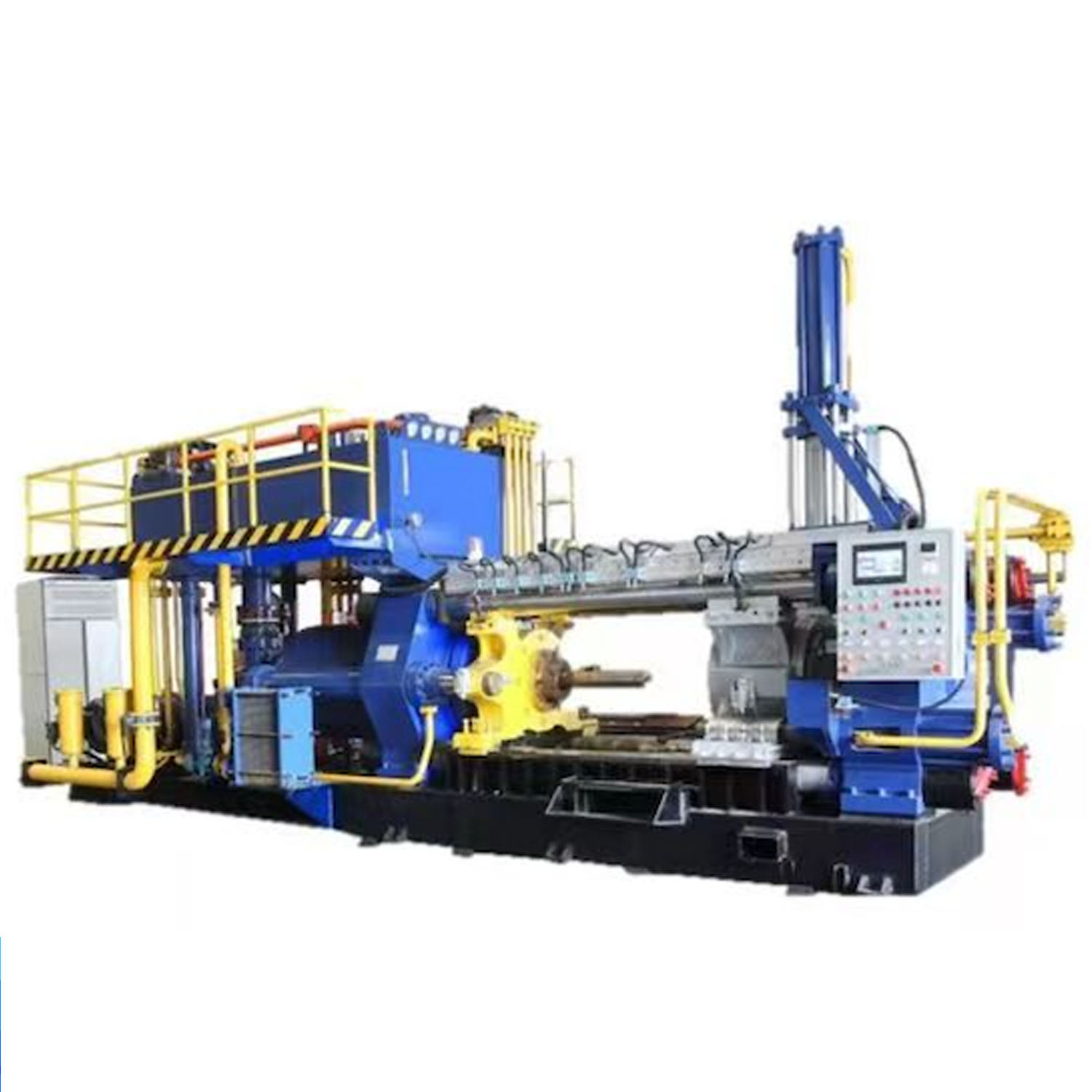
An aluminium extrusion press machine operates by forcing heated billets through a precisely engineered steel die using immense hydraulic pressure (ranging from 500 to 15,000+ tons).
The choice between Direct and Indirect extrusion methods fundamentally impacts friction levels, energy consumption, and maximum profile complexity.
Evaluating a press requires balancing tonnage capacity with thermal management systems, automation capabilities, and expected tooling lifespan.
Real-world production efficiency hinges on mitigating implementation risks like thermal inconsistencies, die wear, and dead-metal zones.
Transforming a solid cylinder of raw metal into a complex architectural profile demands precise control over physics. Every step in the cycle influences the final microstructural integrity of the product. Quality control interventions matter deeply throughout these sequential phases.
The journey begins inside a specialized pre-heating furnace. Operators must elevate the aluminium billet temperature to exactly 400°C–500°C. We apply this thermal energy to achieve a malleable, solid state without ever melting the metal. The material must remain cohesive enough to push, yet soft enough to flow like stiff clay.
Inconsistent heating quickly leads to varied flow stress during the push. Cold spots inside the billet resist deformation, causing the metal to shear unevenly. Such thermal variances generate severe surface defects and structural weaknesses in the final profile.
Before the billet enters the pressing chamber, automated systems apply highly specialized lubricants. These compounds coat the dummy block and the main ram head. This protective layer prevents the softened aluminium from permanently bonding to the steel machine components under extreme pressure.
Proper lubrication minimizes friction-induced equipment wear. If operators skip or under-apply this coating, metal transfer occurs. Aluminium particles weld themselves to the dummy block, leading to catastrophic tool damage during subsequent pushes.
The physical transformation occurs inside the heated container. The process unfolds through a rapid sequence of highly pressurized events:
The massive hydraulic ram extends forward, pressing against the lubricated dummy block.
The dummy block forces the heated billet deep into the enclosed steel container.
As forward pressure builds, the billet crushes and expands outward radially.
The expanding metal completely fills the internal walls of the container, sealing off any escape routes.
At this exact moment, the billet cannot expand laterally anymore. It has only one available exit path.
The system now demands breakthrough pressure. The ram applies maximum force to push the trapped aluminium through the precise opening of the steel die. This intense squeezing action shapes the final profile geometry as it exits the machine face.
Die design and hydraulic pressure stability dictate the dimensional tolerances of the output. Any sudden drop in ram pressure causes flow hesitation. Such hesitation leaves visible stop-marks on the profile surface, ruining its aesthetic and structural value.
Extrusion does not end when the metal clears the die. The profile immediately enters the post-extrusion phase. Rapid cooling systems, utilizing either forced air or water quenches, instantly drop the metal temperature. This sudden chill locks in the required metallurgical properties and prevents grain overgrowth.
Following the quench, mechanical pullers grip both ends of the profile. They apply a controlled stretch to correct the natural twisting and bowing caused by thermal shock. Finally, high-speed saws slice the continuous metal ribbon into manageable commercial lengths for transport.
Engineers must choose between two primary mechanical approaches when setting up an extrusion line. Each method handles friction differently, directly impacting process efficiency and structural limitations.
Direct extrusion stands as the dominant industry standard for most architectural and structural profiles. In this mechanism, the main ram actively pushes the billet through a stationary die located at the far end of the container.
This method offers exceptional versatility. It easily supports complex, multi-cavity dies. Operators can push highly intricate shapes with relative ease. However, direct extrusion carries distinct physical limitations. High friction occurs aggressively between the moving billet and the stationary container walls. Overcoming this friction requires significantly higher breakthrough pressure. Consequently, it increases overall energy use and accelerates tool wear across the board.
Indirect extrusion flips the mechanical dynamic entirely. The die mounts directly onto a hollow ram. This ram then moves forcefully into a completely stationary billet. Because the billet does not slide against the container walls, peripheral friction virtually disappears.
This approach reduces total friction by up to 25-30%. The reduction allows for much faster extrusion speeds and lower operating temperatures. It also produces more uniform grain structures from the front to the back of the profile. However, indirect extrusion faces strict limitations. The output must pass through the internal diameter of the hollow ram. Therefore, this method remains unsuitable for highly complex or overly large cross-sections.
Evaluation Metric | Direct (Forward) Extrusion | Indirect (Backward) Extrusion |
|---|---|---|
Friction Levels | High (billet slides against container walls) | Low (billet remains stationary in container) |
Profile Complexity | High (supports intricate, multi-cavity designs) | Limited by the hollow ram's internal diameter |
Energy Consumption | Higher (needs extra pressure to overcome friction) | Lower (up to 30% reduction in friction loss) |
Grain Structure | Can vary slightly from front to back | Highly uniform throughout the entire length |
You cannot evaluate a high-performing Aluminium Extrusion Press without analyzing the tooling attached to it. Press machinery performance relies intimately on die compatibility and resilience.
Engineers categorize tooling into two primary families: flat dies and porthole dies. Flat dies create solid profiles, such as standard bars, rods, or flat channels. They require a straightforward push, where the metal flows directly through a single cut-out shape.
Porthole or bridge dies create hollow profiles, like square tubes or intricate window frames. These dies require substantially higher press tonnage. The machine must force the solid metal to split apart, flow around internal steel mandrels, and aggressively weld itself back together inside a specialized welding chamber. Insufficient tonnage during this phase results in weak weld seams, compromising the structural safety of the final part.
Facility managers must constantly address harsh wear-and-tear realities. The intense pressure inside the container causes microscopic die deflection. The steel actually bends and flexes slightly during every single push.
This deflection dictates how frequently operators must pull tooling from the machine. Teams routinely swap, polish, or entirely replace these dies to maintain tight geometric tolerances. Frequent die maintenance directly impacts machine uptime. A press sitting idle for a die change produces zero revenue. Therefore, investing in high-grade tooling steel often proves more critical than merely upgrading the hydraulic pumps.
Upgrading a facility requires strict attention to engineering specifications. When shortlisting new equipment, buyers must look past surface-level marketing and examine core performance metrics.
Press tonnage serves as the foundational metric for any extrusion operation. You must match the machine's pressing force to the required Circumscribing Circle Size (CCS) of your largest profile. The CCS represents the smallest circle you can draw entirely around the profile's cross-section.
A simple rule of thumb dominates the industry: larger, heavier profiles require exponentially higher tonnage to maintain adequate flow speed. Attempting to push a massive 10-inch CCS profile on a 1,000-ton press guarantees failure. The metal will stall inside the die, causing a costly machine jam.
Power generation has evolved dramatically over the last decade. Traditional setups rely on continuous-run hydraulic power. These pumps run at full speed constantly, bypassing unneeded oil back into the reservoir. This method wastes massive amounts of electricity.
Modern servo-driven hydraulic systems offer a far superior evaluation dimension. Servo motors power up only when the ram actually moves. They slow down during dead cycles. These modern systems offer up to 20-30% energy savings. They also provide highly precise speed control, easily justifying the higher upfront capital expenditure over the machine's lifespan.
Heat generation remains the most volatile variable in the extrusion cycle. Pushing metal through a tight die generates immense friction heat. If the profile exits too hot, the surface melts and blisters.
Advanced machinery highlights the importance of isothermal extrusion control. This system relies on sophisticated automation. Infrared sensors read the exit temperature in real-time. The computer then automatically adjusts the hydraulic ram speed to maintain a perfect thermal balance. This automated control ensures consistent metallurgical properties and drastically reduces scrap rates across continuous production shifts.
Operating heavy industrial equipment carries unavoidable engineering risks. Integrating any heavy-duty Aluminium Extrusion Press Machine into a facility demands rigorous planning to avoid catastrophic downtime.
Scrap generation destroys production efficiency. Operators constantly battle a specific set of recurring surface defects:
Blistering: Trapped air or excessive exit temperatures cause the surface metal to bubble and pop.
Surface Tearing: Pushing the ram too fast exceeds the alloy's flow stress, physically ripping the outer layer.
Die Lines: Microscopic debris or damaged bearings in the die score deep grooves along the profile length.
Mitigating these issues requires strict adherence to operating parameters. You cannot simply speed up the ram to meet a tight deadline without risking severe tearing.
During the push, the outer skin of the billet cools against the container walls. This cooling creates a "dead metal" zone. Oxides, impurities, and cooler aluminium accumulate at the very back of the billet, forming what operators call "the butt."
You must never allow this contaminated butt to enter the die. Doing so injects severe structural flaws directly into the final profile. The press requires a highly precise shearing mechanism. A heavy steel blade drops down instantly, slicing the contaminated butt away from the clean profile before the next cycle begins.
Buyers frequently underestimate the hidden physical costs of installation. You cannot place a 3,000-ton press on standard warehouse concrete. These machines require massive, custom-poured foundation pits. The concrete must absorb intense, repetitive seismic shocks without cracking.
Furthermore, the electrical draw demands high-voltage industrial substations. Quenching systems and hydraulic coolers require extensive, high-volume cooling water infrastructure. Failing to engineer the surrounding facility properly leads to overheating pumps, cracked floors, and localized power grid failures.
An aluminium extrusion press represents a complex ecosystem of thermal dynamics, volatile hydraulic pressure, and microscopic precision tooling. It functions as far more than just a brute-force ram pushing metal into a hole. Controlling this ecosystem requires constant vigilance over temperature, friction, and metal flow rates.
Begin your specific selection process by clearly defining your maximum profile size (CCS) and your desired alloy types. Harder alloys like the 7000 series demand drastically more power than softer 6000 series metals. These baseline requirements strictly dictate the exact press tonnage and heating capabilities your facility needs to survive.
Take proactive steps before finalizing any facility upgrades. Consult closely with dedicated equipment engineers. Request a comprehensive capacity-to-tonnage audit based on your specific product designs. Reviewing detailed machine specification sheets against your actual production goals ensures a successful, long-term machinery deployment.
A: Three main factors dictate required tonnage: the cross-sectional area of the specific profile, the inherent hardness of the chosen aluminium alloy, and the overall extrusion ratio. For example, pushing a rigid 7000 series aerospace alloy requires significantly more hydraulic force than pushing a soft 6000 series architectural alloy through the exact same die.
A: A realistic timeframe typically ranges from 1 to 3 minutes per individual billet. However, actual contact time is only part of the equation. Dead cycle time—the seconds spent loading the next billet and shearing the scrap butt—stands as a critical metric for evaluating overall machine efficiency and daily throughput.
A: Extrusion relies entirely on a solid-state forming process. Melting the metal into a liquid would completely destroy its structural integrity. Liquid aluminium cannot hold a shape under hydraulic pressure. By keeping the billet heated to a malleable but solid state, the metal flows predictably and retains its high tensile strength upon cooling.