Views: 314 Author: Site Editor Publish Time: 2026-03-14 Origin: Site
Turning on a diesel generator might seem like a simple task involving a key or a button. However, when you are dealing with a Large Industrial unit, the process requires a systematic approach to ensure safety, efficiency, and equipment longevity. Whether you are operating a Silent backup unit for a hospital or a Three phase power plant for a factory, the startup procedure is the most critical phase of its operation.
In this comprehensive guide, we provide "Expert Insight" into the correct sequence for activating your power source. We will move beyond basic "on/off" instructions to explore pre-start checks, control panel navigation, and the nuances of high-output systems. By following these professional steps, you ensure your diesel generator maintains Low fuel consumption and avoids the mechanical stress that leads to premature failure.
Before you even touch the control panel of your diesel generator, you must perform a "walk-around" inspection. This is the difference between a successful start and a catastrophic engine seizure. For a Large Industrial machine, these checks are non-negotiable.
First, check the oil levels. Diesel engines rely on high-grade lubrication to handle the heat of combustion. Next, inspect the coolant. A High voltage diesel generator generates immense thermal energy; without proper coolant levels, it will overheat within minutes. Finally, check the fuel. Ensure you are using clean, water-free diesel to maintain Low fuel consumption and prevent injector clogs.
Ensure no tools or loose rags are sitting on the engine block. In a Silent diesel generator, the enclosure can trap heat and debris, creating a fire hazard. Check the battery terminals for corrosion. A weak battery is the leading cause of "fail-to-start" errors. Ensure the exhaust outlet is clear of obstructions so the unit can breathe properly.
| Component | What to Check | Ideal Status |
| Engine Oil | Dipstick level | Between Min and Max |
| Coolant | Expansion tank | Visible at "Full" line |
| Battery | Voltage/Terminals | >12.4V / Clean |
| Air Filter | Visual indicator | Green (Clear) |
| Fuel Tank | Gauge | >50% for long runs |
Modern Industrial diesel generator sets utilize digital controllers like Deep Sea or ComAp. Understanding these interfaces is key to a smooth startup.
Most units feature an Automatic Transfer Switch (ATS). In "Auto" mode, the diesel generator starts itself when the utility grid fails. However, for maintenance or testing, you must know how to use "Manual" mode. Selecting Manual gives you full control over the crank cycle and allows you to monitor the Three phase output before applying the load.
Before cranking, look at the screen for any active fault codes. If the "E-Stop" (Emergency Stop) button is depressed, the unit will not start. Reset all alarms before proceeding. High-end Silent models often display oil pressure and engine temperature even before the engine turns over. This data tells you if the diesel generator is ready for a High voltage load.
Once the pre-checks are complete, it is time to bring the engine to life. This process varies slightly between a Portable unit and a Large fixed installation, but the core physics remain the same.
Switch the Breaker to OFF: Never start a diesel generator under load. This causes "sudden-load" stress that can damage the alternator.
Turn the Key or Press Start: For many Large engines, the controller will first activate "Glow Plugs" to warm the cylinders.
Monitor the Crank: The engine should fire within 3 to 7 seconds. If it doesn't start after three attempts, stop. Continuing will drain the battery and potentially "wash" the cylinders with unburnt fuel.
Once the engine is running, do not immediately flip the power switch. It needs a "warm-up" period. For a Three phase Industrial diesel generator, this usually takes 2 to 5 minutes. During this time, the oil circulates, and the engine reaches a stable operating temperature, which is essential for achieving Low fuel consumption.
For Industrial users, the goal is often to provide Three phase power to heavy machinery. This requires careful observation of the electrical parameters immediately after the start.
A Standard diesel generator must reach its rated speed (usually 1500 RPM for 50Hz or 1800 RPM for 60Hz) before it can produce stable High voltage. Watch the frequency meter. If it fluctuates wildly, the governor may need adjustment. Applying a load to an unstable High voltage source can "fry" sensitive electronics or trip the circuit breakers of your facility.
When you finally engage the main breaker, monitor the "Amperage" on all three phases. An unbalanced load—where one phase carries significantly more weight than others—can cause the alternator to overheat. This reduces the efficiency of the diesel generator and increases its Low fuel consumption benefits by forcing the engine to work harder than necessary to maintain the magnetic field.
While the internal combustion process is the same, a Silent diesel generator and a Portable unit have unique operational requirements during startup.
In a Silent unit, the sound-dampening foam and baffles restrict airflow more than an open-frame set. You must ensure the intake and discharge louvers are fully functional. If the automatic louvers fail to open when you turn on the diesel generator, it will "trip" on a high-temperature alarm within minutes.
If you are using a Portable diesel generator for a construction site, you must ensure it is properly grounded (earthed). Because these units are often moved, the grounding rod might be forgotten. Before turning it on, verify the frame is bonded to the earth to prevent shocks during the Fuel Dispensing or operation phases.
Diesel fuel behaves differently in freezing temperatures. It can "gel," making it impossible for the engine to start or stay running.
For an Industrial diesel generator located in cold climates, we recommend using an electric block heater. This keeps the engine coolant warm 24/7. When you turn on the diesel generator, the warm block allows the oil to flow instantly, reducing wear on the bearings.
Some Premium Large units include fuel line heaters. These prevent wax crystals from forming in the diesel. If your unit doesn't have one, you might need to use "winter-blend" fuel or additives to maintain Low fuel consumption and ensure a reliable start when the grid goes down in a blizzard.
Once the diesel generator is running and warm, the way you apply the load determines the health of the engine.
Do not throw 100% of the building's load onto the Industrial diesel generator at once. This causes a "voltage dip" and can stall the engine. Instead, apply loads in steps—starting with the largest motors first and then adding lighting and smaller electronics. This allows the turbocharger and governor to react smoothly.
If you run a Large diesel generator on a very light load (less than 30%) for too long, it can suffer from "wet stacking." This is when unburnt fuel accumulates in the exhaust. It looks like black oily liquid leaking from the manifold. To prevent this, ensure the diesel generator reaches its operating temperature by applying a sufficient load shortly after startup.
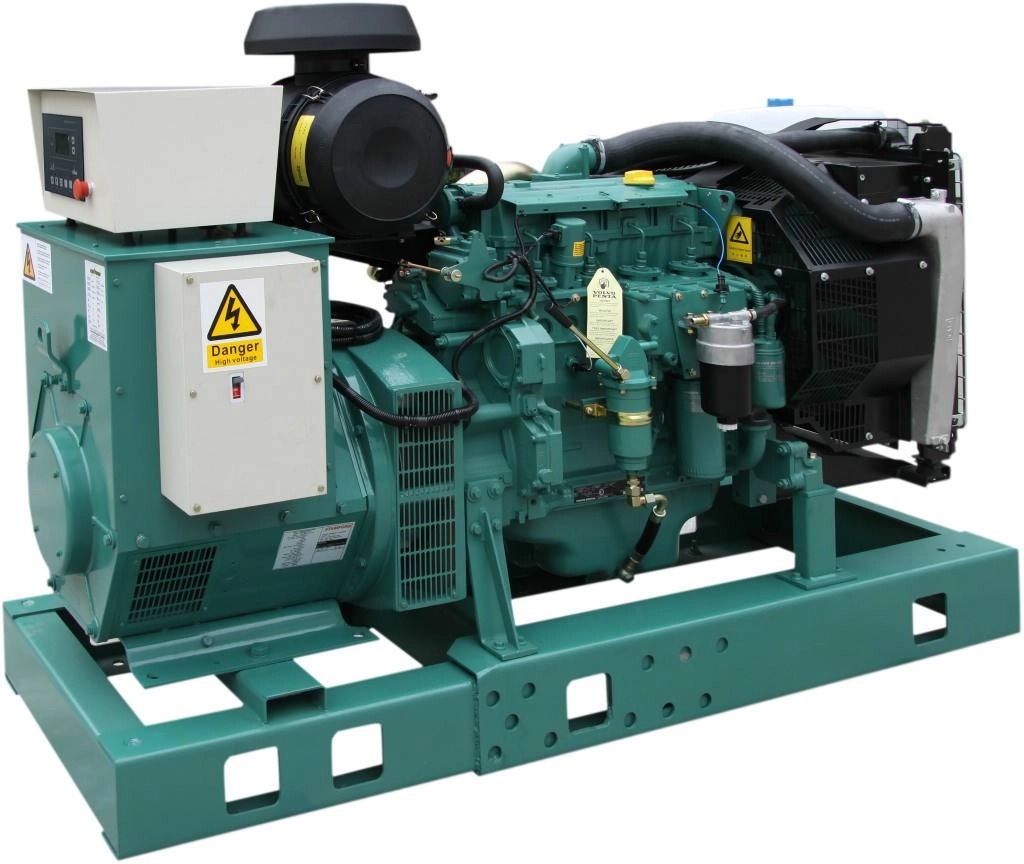
How you turn off a diesel generator is just as important as how you turn it on. Never stop a Large engine immediately after it has been running at full load.
When the load is removed, the turbocharger is still spinning at high speeds and is incredibly hot. If you kill the engine instantly, the oil flow stops, and the oil "cooks" inside the turbo bearings. Most Industrial controllers have a built-in "Cool-down Timer" that keeps the engine idling for 3 to 5 minutes to dissipate heat safely.
After the unit has stopped, check the fuel level again. Record the hours of operation in your maintenance log. This data helps you predict when the next service is due and ensures that the diesel generator remains a reliable Low fuel consumption asset for your facility.
Mastering the process of how to turn on a diesel generator is about more than just turning a key. It is about understanding the synergy between the mechanical engine and the High voltage electrical output. By following a strict pre-start protocol, allowing for proper warm-up, and managing your Three phase load, you protect your investment. Whether it is a Silent residential unit or a Large Industrial powerhouse, a disciplined startup routine is the key to reliable backup power.
Q: Why does my diesel generator turn over but fail to start?
A: This is usually caused by air in the fuel lines, a clogged fuel filter, or a faulty glow plug. For an Industrial unit, check the fuel shut-off solenoid to ensure it is opening when you turn the key.
Q: Can I start a diesel generator while the load is connected?
A: No. Starting under load can damage the alternator windings and the voltage regulator. Always ensure the main output breaker is "OFF" before initiating the start sequence.
Q: How long can I leave a diesel generator running?
A: A Large Industrial unit can run for hundreds of hours as long as you maintain the oil and coolant. However, Portable units usually need a break every 8 to 12 hours for refueling and a quick safety check.
I have seen firsthand how critical reliable power is for global industries. At our company, we operate a massive, state-of-the-art manufacturing facility dedicated to the production of high-performance diesel generator sets. We are not just an assembly plant; we are a center of engineering excellence. Our factory features advanced CNC machining centers and automated load-testing bays where every Industrial unit we build is pushed to its limits before it leaves our floor.
Our strength lies in our ability to provide custom power solutions, ranging from Silent canopy units to Large containerized Three phase systems. We prioritize Low fuel consumption and durability by sourcing only the best components and utilizing a rigorous quality control system. As a leading B2B manufacturer, we understand that our customers depend on our machines to protect their businesses during power outages. That is why we invest heavily in R&D to ensure our High voltage equipment is the most reliable in the market. When you choose our products, you are partnering with a factory that stands behind every kilowatt produced.


